
This post is also available in:
 اردو
اردو
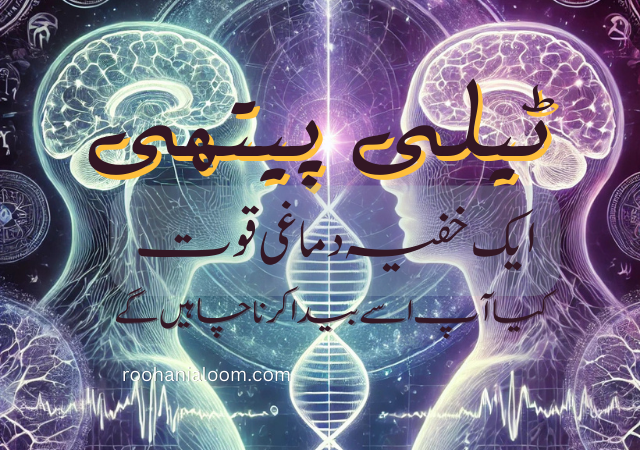
Telepathy is the mental communication between humans in which two or more people send and receive messages to each other through thoughts, emotions, or brain waves, without any physical means (sound, touch, writing, etc.). This concept has both amazed and fascinated curious minds for centuries. Some people consider telepathy to be a trainable spiritual or mental ability , while the scientific world places it in the category of Parapsychology, where research debate is still ongoing on its true existence and exact mechanism.
In this first installment, we will examine the basic explanation of telepathy, its historical overview, and its religious and scientific aspects so that you can understand why this topic is so fascinating. On this topic, it would be very useful if you read the book “Learn Telepathy” by Khwaja Shamsuddin Azimi.
A look at the main points
- The literal meaning of telepathy and its existence in various traditions
- Evidence and research of telepathy in ancient and modern history
- Interpreting it from a religious and spiritual perspective
- Scientific perspective: repeatable experiments, neuroscience, and ESP experiments
- Potential benefits and precautions of learning telepathy
What is telepathy?
Telepathy is a combination of two Greek words:
- Tele (distance)
- Pathy (the act of feeling or sensing)
Thus, its general meaning becomes: “to receive or transmit a feeling from a distance.”
From ancient civilizations to modern times, humans have always been curious about whether our minds are connected to each other through some subtle energy system. In this context, we mention mental connection and brain waves, which have been studied by neuroscience experts from different angles.
Frequently Asked Questions (FAQ)
Can everyone learn telepathy?
Some experts believe that many people can improve this ability through mindfulness, meditation, and consistent practice.
Is telepathy really possible?
Scientifically conclusive evidence is not available, but numerous experiments provide results that do not completely rule out this topic.
Historical glimpse
(a) Signs of ancient times
Greek philosophers discussed various spiritual and psychological forces, including the transmission of thoughts.
In Eastern traditions (Hinduism, Buddhism) there are examples of mental harmony between a spiritual master and a disciple.
(b) Nineteenth century and formal terminology
The term “telepathy” in English was coined in the late 19th century.
During this period, the Society for Psychical Research was established, which conducted formal research into phenomena such as dreams, visions, and telepathy.
(c) 20th century research
Dr. JB Rhine and his colleagues conducted experiments with telepathy and other extrasensory perception (ESP) using Zener Cards .
Many times the results were encouraging, but repeated experiments could not yield consistent results, which continued to be debated in the scientific community.
(d) Eastern Sophia and Yogi
Among Sufis and other spiritual figures, there are traditions of “hearing the heart” and gaining insight into the inner being of the disciple, which are usually associated with revelation or the discernment of the believer.
Hindu yogis and Buddhist monks also speak of mental contact and the exchange of inner knowledge in a state of deep meditation.
3) Religious and spiritual aspects
Various religions and spiritual schools of thought mention abilities similar to telepathy. These teachings generally speak of spiritual growth, inner peace, and harmony with a larger cosmic consciousness. For example:
Islamic Sufism : It is said of many saints and Sufis that they knew the state of the heart of their disciples.
Yoga and Buddhism : Attempts are made to activate the third eye and awaken inner powers through deep meditation.
Some scholars and spiritual experts believe that every human being has a subtle electromagnetic field that can be tuned to a certain level and harmonize with others. However, these theories await full validation by modern science.
4) Scientific perspective: experiments and research
Science requires repeatable experiments and quantitative evidence to verify any claim.
(a) ESP and Zener card experiments
The markings on the Zener cards are kept hidden and the recipient is asked what the marking is on the card.
Sometimes the result turns out to be surprisingly accurate, but many scientists attribute this to coincidence or additional factors.
(b) Neuroscience
Efforts are being made to understand the rhythm of brain waves with modern tools such as EEG and fMRI.
So far, no mechanism has been discovered that can definitively prove telepathy, but research is ongoing.
(c) Scientific criticism and caution
Most experts say that peer review studies do not consistently show positive results in favor of telepathy, so more research is needed on it.
There is also a communication gap between scientific and spiritual schools of thought that needs to be bridged.
5) Benefits and practical uses of learning telepathy
Although telepathy has not been definitively confirmed, several mental and spiritual benefits can still be gained from its practices:
Increased concentration and focus:
Methods like meditation and visualization strengthen the mind.
Imagination and creative thinking:
Focusing on the formation and communication of ideas can improve creativity.
Spiritual peace and inner connection:
Those who approach these practices in a spiritual way expect to find inner peace and deep self-awareness.
Emotional stability:
Meditation and mindfulness exercises can help keep the mood moderate and calm.
The current episode is presented as a brief introduction. In the next episodes, we will cover the following topics in more depth, God willing.
1. Celebrities who work with telepathy
- Western parapsychologists and their research
- Eastern Sufis, Yogis and Their Spiritual Heritage
2. Practical exercises and training
- Basic principles of meditation and methods of concentration
- Step-by-step exercises for sending and receiving ideas
- Detailed procedures for Zener cards and other tested exercises
3. Success factors and potential obstacles
- The importance of emotional stability and intention
- The combination of conscious and unconscious forces
- Scientific limitations and natural concerns
4. Questions and Answers
- Arguments for and against telepathy
- An examination of religious, moral, and social implications
5. Precautions
- How to stay safe from false claims and rumors?
- How to maintain balance while taking care of mental and spiritual health?
This article will provide you with an introductory path to entering the mysterious and fascinating world of telepathy. Our goal is to present a comprehensive overview of this topic in light of scientific, spiritual, and historical perspectives. If you are interested in learning more about this, stay tuned for our next installments and share your thoughts or questions in the comments.
Your questions or opinions are very important to us. If something is unclear or you would like more details, please let us know. On this journey, together we will explore the fascinating aspects of telepathy and see if it is just a theory or an observable reality.


